Please note, the timings and presenters are subject to change.
PLEASE NOTE there will be no lunch provided throughout the conference. |
|
|
Ice- Breaker Session
|
|
16:00 – 18:00
|
Networking event for delegates. This is a bookable event on the registration form.
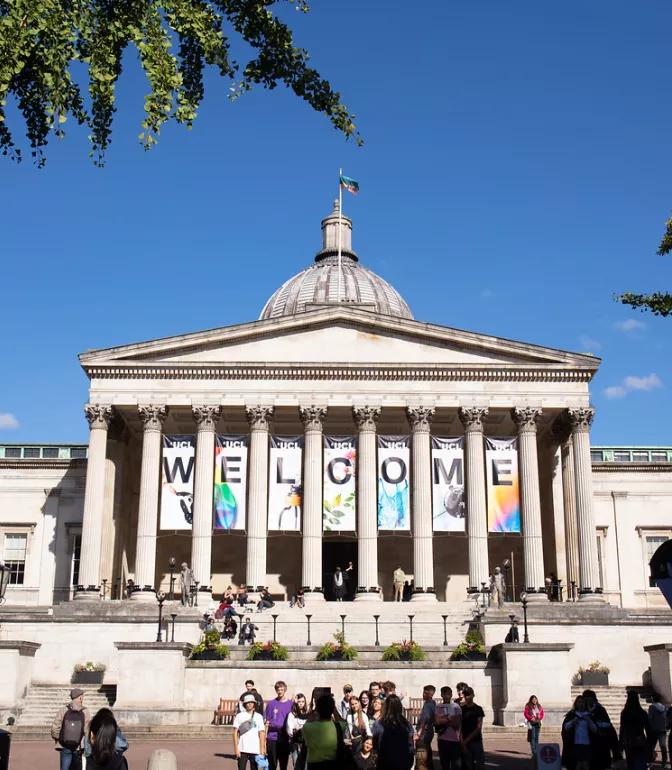
Location: Wilkins Terrace, UCL
Registration will be available during the session.
|
|
|
Please Note: Posters will only be displayed on Monday and Tuesday
Main lecture theatre: Darwin building B40
Poster Sessions: B05 and B15
|
09:00
|
Registration
|
|
09:20 – 10:30
|
Session 1
|
|
09:20 – 09:30
|
Welcome
|
|
09:30 – 09:45
|
O01: Invasion – Reinvasion? Has Patiriella regularis (Verrill, 1867) crossed the Tasman Sea more than once?
Hugh Carter, Natural History Museum
|
|
09:45 – 10:00
|
O02: Understanding diploporan niche conservatism through phylogenetic paleoecology
Elizabeth Altier, Binghamton University
|
|
10:00 – 10:15
|
O03: Reconstructing past echinoderm communities based on ossicles preserved in sediment cores
Bettina Bachman, University of Vienna
|
|
10:15 – 10:30
|
O04: Originations and modern distribution of Astriclypeoidea with new fossil evidence from India and Taiwan
Jihpai Lin, National Taiwan University
|
|
10:30 – 11:00
|
Coffee Break
|
|
11:00 – 12:30
|
Session 2
|
|
11:00 – 11:30
KEYNOTE
|
KN1: Inspired by the stars: 30 years of research on the functional biology of asteroid tube feet
Patrick Flammang, University of MONS
|
|
11:30 – 11:45
|
O05: Going with the flow: examining fluid entrapment around disparate feeding structures of blastozoan echinoderms
Sarah Sheffield, Binghamton University
|
|
11:45 – 12:00
|
O06: Staying flexible: Evolution of the peristomial membrane in stem group echinoids
Luis Pauly, University of Bonn
|
|
12:00 – 12:15
|
O07: From microstructure to function and bioinspiration: hierarchical biomechanics of planispirally coiled crinoids
Przemyslaw Gorzelak, Institute of Paleobiology, Polish Academy of Sciences
|
|
12:15 – 12:30
|
O08: Morphological and ecological evolution of the British Cretaceous echinoids
Chia-Hsin Hsu, University of Southampton
|
|
12:30 – 14:00
|
Lunch
|
|
14:00 – 15:15
|
Session 3
|
|
14:00 – 14:15
|
O09: The functional performance of spiral feeding structures in Cambrian echinoderms
James McDermott, The Natural History Museum
|
|
14:15 – 14:30
|
O10: Evaluating the ecological and morphological linkages between girdle shape and lantern musculature in “regular” echinoids
Nicholas Hebdon, Baylor University
|
|
14:30 – 14:45
|
O11: News from Glowing Stars
Jerome Mallefet, UCLouvain BMAR
|
|
14:45 – 15:00
|
O12: Neuropeptide evolution and function: new perspectives from the starfish Asterias rubens
Maurice Elphick, Queen Mary University of London
|
|
15:00 – 15:15
|
O13: Discovery of a novel secretin family-related neuropeptide signalling system in echinoderms
Kite Jones, Queen Mary University of London
|
|
15:15 – 15:45
|
Coffee Break
|
|
15:45 – 17:00
|
Session 4
|
|
15:45 – 16:00
|
O14: What killed the feather star Antedon bifida? Evidence from field, mesocosm, and historical data rules out warming and predation
Nancy Peters, University of Plymouth
|
|
16:00 – 16:15
|
O15: Survival opportunity or causality: sea urchins’ associated fauna in subtropical coastal ecosystems
Raibel Nunez-Gonzalez, Universidad de Las Palmas de Gran Canaria
|
|
16:15 – 16:30
|
O16: Environmental change opens a gate for skin ulceration disease
Mikko Koivu-Jolma, University of Helsinki; University of Eastern Finland
|
|
16:30 – 16:45
|
O17: Taxonomic diversity and community structure of echinoderms in the protected coastal area of Essaouira (Atlantic coast of Morocco)
Mohamed Amine Hilal, Higher Normal School -ENS
|
|
16:45 – 18:00
|
Poster Session
|
|
18:00
|
Close
|
|
|
|
09:00
|
Registration
|
|
09:30 – 10:30
|
Session 5
|
|
09:30 – 09:45
|
O19: Macroevolutionary diversification of feeding structures in echinoids
Alice Leavey, University of Southampton
|
|
09:45 – 10:00
|
O20: A new dibrachicystid echinoderm from the Cambrian of Morocco informs on the origin of ‘arms’ in Pelmatozoa
Samuel Zamora, IGME-CSIC
|
|
10:00 – 10:15
|
O21: Broad comparative analysis of sea urchin (Echinodermata: Echinoidea) tooth shape provides a novel substrate for systematic and functional inferences
Alexander Ziegler, Bonner Institut für Organismische Biologie
|
|
10:15 – 10:30
|
O22: Atelecrinidae: using X-ray tomography and molecular data to look into the latest hypotheses
Pablo Martinez Soares, Muséum national d'Histoire naturelle
|
|
10:30 – 11:00
|
Coffee Break
|
|
11:00 – 12:30
|
Session 6
|
|
11:00 – 11:30
KEYNOTE
|
KN2: The paleoecology of biotic interactions Involving echinoids
Elizabeth Petsios, Baylor University
|
|
11:30 – 11:45
|
O23: (Re)discovery" of an echinoderm Lagerstätte in the Lower Devonian of the Argentine Precordillera
Ninon Allaire, LGLTPE, Université Claude Bernard Lyon 1
|
|
11:45 – 12:00
|
O24: A first articulated fossil molpadid sea cucumber from the Early Miocene deep-water Konservat Lagerstätte of Meljski hrib, Maribor, Slovenia
Mike Reich, State Natural History Museum Braunschweig/Brunswick
|
|
12:00 – 12:15
|
O25: Indirect evidence for predation on crinoids from the Lower Devonian Hunsrück Slate Germany
Teresa Franke, University of Bonn
|
|
12:15 – 12:30
|
O26: Palaeoenvironmental control of echinoderm assemblages in the Lower Ordovician of the Montagne Noire (France)
Bertrand Lefebvre, Université de Lyon, CNRS
|
|
12:30 – 14:00
|
Lunch
|
|
14:00 – 15:15
|
Session 7
|
|
14:00 – 14:15
|
O27: Global warming modulates pollution toxicity in the development of Mediterranean sea urchin species
Chiara Martino, University of Palermo
|
|
14:15 – 14:30
|
O28: Multidisciplinary evidence of adaptation to natural ocean acidification in sea urchins
Rocío Perez-Portela, University of Barcelona
|
|
14:30 – 14:45
|
O29: Have the growth and morphometrics of the sea urchin Evechinus chloroticus responded to 30 years of environmental change?
Miles Lamare, University of Otago
|
|
14:45 – 15:00
|
O30: Thermal plasticity reveals potential physiological thresholds in Coscinasterias tenuispina
Robert Fernandez Vilert, Universitat de Barcelona
|
|
15:00 – 15:45
|
Coffee Break
|
|
15:45 – 17:00
|
Session 8
|
|
15:45 – 16:00
|
O31: Development of diamond-type stereom microlattice and the emergence of saddle-shaped minimal surfaces of the echinoderm skeleton
Kamil Humanski, Instytut Paleobiologii im. R. Kozlowskiego Polskiej Akademii Nauk
|
|
16:00 – 16:15
|
O32: Pit sweet pit: rock type mediates growth–trait relationships in sea urchins
Jose Carlos Hernandez, Universidad de La Laguna
|
|
16:15 – 16:30
|
O33: Extracellular trap formation in echinoderm coelomocytes: insights into an ancient immune strategy
Carla Pugliese, University of Mons (UMONS)
|
|
16:30 – 16:45
|
O34: Hidden colors of immunity: carotenoid-rich coelomocytes challenge a century of assumptions
Estelle Bossiroy, University of Mons (UMONS)
|
|
16:45 – 17:00
|
O35: Crinoid coelomic cells as a model for regeneration: first morphological and functional profiling with relevance to human tissue repair
Dijana Pavleska, UKSH Kiel
|
|
17:00 – 18:00
|
Poster Session
|
|
18:00
|
Close
|
|
|
|
Field Trip
|
|
07:30 – 19:30
|
UNESCO Jurassic Coast World Heritage Site
Philpot Museum, Lyme Regis and Charmouth Heritage Centre
|
|
|
|
09:00
|
Registration
|
|
09:30 – 10:30
|
Session 9
|
|
09:30 – 09:45
|
O36: A new model to relate echinoderm pentaradial symmetry with the ancestral bilateral symmetry
Laurent Formery, CNRS
|
|
09:45 – 10:00
|
O37: The oldest bilaterally symmetrical fossil echinoderm informs on the origin of ambulacra
Imran Rahman, The Natural History Museum
|
|
10:00 – 10:15
|
O38: A new enteropneust hemichordate from the early Cambrian of China resolves the nature of the last common ambulacrarian ancestor
Frankie Dunn, University of Oxford
|
|
10:15 – 10:30
|
O39: Using microCT and Bayesian phylogenetic methods to investigate the evolution of Cambrian echinoderms
Lucy Jackson, The Natural History Museum
|
|
10:30 – 11:00
|
Coffee Break
|
|
11:00 – 12:30
|
Session 10
|
|
11:00 – 11:30
KEYNOTE
|
KN3: Gene regulatory networks meet cell type evolution: lessons from an 'urchin'
Maria Ina Arnone, Stazione Zoologica Anton Dohrn
|
|
11:30 – 11:45
|
O40: Evolutionary emergence of bioluminescence in brittle stars: from global ecological patterns to molecular validation in Amphiura filiformis
Jérôme Delroisse, University of MONS
|
|
11:45 – 12:00
|
O41: Echinoderm larvae illuminate conserved sensory–secretory and neural-like cell programs across animal evolution
Imran Luqman Muhammad Hatta, The Marine Biological Association
|
|
12:00 – 12:15
|
O42: Novel insights into the evolution of toxins found in spine and pedicellarial venom glands in sea urchins (Echinodermata: Echinoidea)
Simon Coppard, University of Greenwich
|
|
12:15 – 12:30
|
O43: Deorphanisation and evolutionary analysis of monoamine GPCRs in the sea urchin Mespilia globulus
Yang Zou, University of Southampton
|
|
12:30 – 14:00
|
Lunch
|
|
14:00 – 15:15
|
Session 11
|
|
14:00 – 14:15
|
O44: The spikes of spikey skinned animals
Gary Wessel, Brown University
|
|
14:15 – 14:30
|
O45: Reassessing species boundaries in Promachocrinus (Crinoidea: Antedonidae) through comprehensive morphological study
Tulio Henrique de Souza, University of São Paulo
|
|
14:30 – 14:45
|
O46: Identification and preliminary characterization of softenin, a softener of mutable collagenous tissues, in Holothuria forskali
Némo Lemaire, University of MONS
|
|
14:45 – 15:00
|
O47: The Ophiuroidea of Iceland - morphology, taxonomy and distribution
Sabine Stoehr, Swedish Museum of Natural History
|
|
15:00 – 15:15
|
O48: Exploring abyssal echinoid diversity in the Clarion-Clipperton zone
Magdalini Christodoulou, Biodiversity Center, OÖ Landes-Kultur GmbH
|
|
15:15 – 15:45
|
Coffee Break
|
|
15:45 – 17:00
|
Session 12
|
|
15:45 – 16:00
|
O49: Using HCR-RNA FISH to investigate spatial gene expression in the juvenile sea urchin tooth
Lauren Hudson, University of Southampton
|
|
16:00 – 16:15
|
O50: How do complex organs arise? Exploration of the pancreatic-like cell composition of a sea urchin by differential single-cell transcriptomics
Maria Lorenza Rusciano, Stazione Zoologica Anton Dohrn
|
|
16:15 – 16:30
|
O51: When species meet: genomic insights into speciation, hybridization, and population structure in Ophiothrix
Marta Martin Huete, Universitat de Barcelona
|
|
16:30 – 16:45
|
O52: Recapitulated developmental regulators Myc and Wnt play diverse roles in post-traumatic regeneration in Ophioderma brevispina
Soji Ademiluyi, University of North Carolina At Charlotte
|
|
16:45 – 17:00
|
O53: Subtle distinctions in population genetics in a high-larval dispersal marine invertebrate, the New Zealand Sand Dollar Fellaster zelandiae
Ian S. Dixon-Anderson, University of Otago
|
|
17:00 – 18:00
|
Open Discussion and Social
|
|
18:00
|
Close
|
|
19:00 – 21:30
|
Conference Dinner
|
|
|
|
09:00
|
Registration
|
|
09:30 – 10:30
|
Session 13
|
|
09:30 – 09:45
|
O54: Morphological revision of the Ophidiasteridae (Valvatacea, Asteroidea) and its implications for the fossil record of the family
Marine Fau, Muséum d'histoire naturelle de Genève
|
|
09:45 – 10:00
|
O55: Evolutionary history of the echinoderm class Soluta
Harry Savage, University of Manchester
|
|
10:00 – 10:15
|
O56: Historical biogeography of the echinoid genus Arbacia: insights from fossils, integrative dated phylogenetic inferences, and biogeographic modelling
Erwan Courville, Université Bourgogne Europe
|
|
10:15 – 10:30
|
O57: Diversification of Southern Ocean Echinoderms
Chester Sands, British Antarctic Survey
|
|
10:30 – 11:00
|
Coffee Break
|
|
11:00 – 12:30
|
Session 14
|
|
11:00 – 11:30
KEYNOTE
|
KN4: How can twenty years of research on echinoderms help minimize and address ocean acidification and other global changes?
Sam Dupont, University of Gothenburg
|
|
11:30 – 11:45
|
O58: The evolution of echinoderm genome architecture
Ferdi Marletaz, University College London
|
|
11:45 – 12:00
|
O59: Echinoderm diversity and palaeoecology on an ancient (Cretaceous) rocky coastline
Andy Gale, University of Portsmouth
|
|
12:00 – 12:15
|
O60: Polyploidy across the Ophiuroidea
Timothy O’Hara, Museums Victoria
|
|
12:15 – 12:30
|
O61: From carnivory to herbivory: dietary shift of Arbacia lixula increases niche overlap with Paracentrotus lividus under acidification
Sara Gonzalez-Delgado, Universitat de Barcelona
|
|
12:30 – 14:00
|
Lunch
|
|
14:00 – 15:15
|
Session 15
|
|
14:00 – 14:15
|
O62: Sea cucumbers in hot—and cold—water: how acute thermal stress drives disease susceptibility in juvenile Holothuria scabra
Noé Wambreuse, University of Southampton
|
|
14:15 – 14:30
|
O63: Multilevel resilience to ocean acidification in Arbacia lixula larvae
Andrés Rufino Navarro, Universidad de La Laguna
|
|
14:30 – 14:45
|
O64: Larval thermal tolerances of the boom-bust subtropical-to-temperate sea urchin Tripneustes australiae
Emily McLaren, The University of Sydney
|
|
14:45 – 15:00
|
O65: Sexual dimorphism and predatory marks in Oligopodia epigonus (Echinoidea, Cassiduloida) from Bangka Island, Indonesia
Jodi Bolgen, Stockton University
|
|
15:00 – 15:15
|
O66: Sleep-like state in Echinodermata: From molecules to behaviour
Jade Guo, University College London
|
|
15:15 – 15:45
|
Coffee Break
|
|
15:45 – 17:00
|
Session 16
|
|
15:45 – 16:00
|
O67: The late Cambrian diversification of cornutes (Echinodermata, Stylophora): New insights from the Furongian of the Montagne Noire (France)
Enzo Birolini, CNRS, Université Claude Bernard Lyon 1
|
|
16:00 – 16:15
|
O68: Anomalocystitid mitrates (Echinodermata, Stylophora) from the Talacasto Formation (Lower Devonian, Argentina): Phylogenetic and palaeobiogeographic implications
Méliné Bobichon, CNRS, Université Claude Bernard Lyon 1
|
|
16:15 – 16:30
|
O69: Ethical echinoderm handling: smart sampling and safe preservation
Hayfa Chammem, Universidad de Murcia
|
|
16:30 – 16:45
|
O70: Echinoderms as a tool to boost ocean literacy at the Museum of Biological Diversity of UNICAMP (MDBio)
Renata Alitto, MDBio, UNICAMP
|
|
16:45 – 17:00
|
Closing Remarks
|
|
17:00
|
Close of Conference
|
|